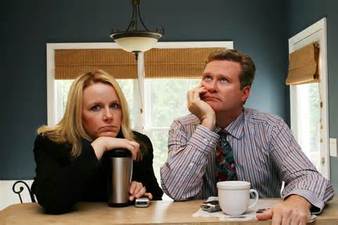
 Over lunch today, a friend and I discussed the concept of normalcy - in particular, what defines a 'normal' person. We concluded that a normal person would: a) exhibit little or no emotion, except of course in the context of a sporting event b) dress similar to others, nothing to stand out from the crowd c) have a 9-5 mediocre, yet acceptable, job d) be satisfied with an uneventful (possibly boring) life e) have no emotional or mental health issues f) if asked 'what's new?' might respond with 'not much' or 'same old, same old' g) most likely be married with a kid or two h) wait for life to begin after retirement, and then complain about being too old to do much of anything Is this what you aspire to be, or think that you should be like? Who defines what's normal anyhow? This is a perfect example of how our minds continually compare and evaluate ourselves with others, based on misconstrued notions. We strive to be better than but often fall short of our idea of what this might look like. On some level, we believe we're not pretty enough, smart enough, tall enough, wealthy enough, young enough. Simply not enough. What if you knew the truth: that most people are believing the exact same disparaging thoughts as you are? Wouldn't that just throw our critical minds for a loop?! When we examine what constitutes normalcy, we discover that there is no normal. It's not only an unrealistic attainment, but a myth that leads to great suffering. Freeing ourselves from this fallacy is liberating, not only for ourselves but for also for everyone we come in contact with. We are giving permission to be our authentic selves. So the question becomes: how do we free ourselves from this myth of normalcy? Please share your thoughts and experiences in the comments section so we can all learn from one another. And stay tuned for part 2 of the Fallacy of Normalcy!
1 Comment
I woke up this morning with enthusiasm about starting my new blog on Mindfulness and Living Consciously.
My first challenge occurred early in the day. I got out of bed to feed my persistent, yet still adorable, feline companion. My cat Pascal was diagnosed with diabetes about two months ago. Six hundred dollars later (!) I have everything he needs to cope with the illness. I wander downstairs to the kitchen to ready his insulin shot. Somehow it slips out of my hand and shatters on the floor. I stare for a moment in disbelief, clean up the mess, and return to my bedroom to get dressed. As I don't own a car I need to walk for an hour to get to/from the drugstore immediately to buy another insulin bottle. I bundle up and head out into the early morning sunshine. The temperature is supposedly -10 degrees, but feels like -20. As I carefully place each step, mindful to avoid slipping on the icy sidewalk, I reflect on this incident. I have learned by now that the question 'why has this happened to ME?' only leads to a negative despairing attitude. I ask aloud 'what is this for? what am I meant to learn here?'. Hmmmm...many thoughts arise, including:
But the truth is that I don't know what this experience is for, and that's ok. It's yet another lesson (how many are there?!) in trust. Trusting that the Universe has my back and is conspiring for my success (even if it doesn't always feel like it). $80 later with a new insulin bottle in hand, I arrive back at home to see Pascal lounging in the sunshine, oblivious to this morning's challenge. Ahhhh, to be a cat, without a care in the world, or a thought to what it all 'means'. He's a great teacher on enjoying life one moment at a time :-) This past weekend my roommate and I decided to take some time to really take stock of our lives and rejuvenate and nurture our souls.We turned off all the phones, internet, car and clocks so that we could really attune to the important things.
Our retreat consisted of delicious food, massage, qigong, satsang with adya, silent meditation, toning, laughing, singing, reading, painting and more painting, silent magical mindful walks in the neighbourhood....and mostly, well, simply being (my favourite thing of all). It was incredible experiencing life without a sense of time. We ate when we were hungry and slept when we were tired, rather than when the clock dictated we 'should'. Time seemed to stretch on and on....it was as if we were on retreat for weeks rather than days (in a good way!). So what have I learned from this experience?....(or rather 'un'-learned)? That not having 'enough time' to do something important is just an illusion. That there is no need for clocks unless the outside world requires my focus and attention (I'm sure my clients appreciate my being on time!). That all we need is love. Truly. And that there's nothing I miss that I don't already have within me, my home, and my relationship. It's all right here. So simple. So pure. Ok, so I already had a pretty good sense of that prior to this weekend, but those of you who know me well, know that I'd never turn down an opportunity to go even deeper :) What's stopping you from planning your own home retreat? Or maybe you have and have some stories to share? If so, I'd love to hear them! Until soon....many blessings to all sentient beings everywhere. Chloe Whenever people ask me what I am most passionate about, the most honest answer I can give is: 'the direct experience of life', or said another way, simply 'being'.
I find it rather humorous at times, how our minds can weave entire illusory worlds of separation from that which we all are: life itself. We are life! We are alive! We are. I am. How could it be otherwise? Think about it. Yes, yes, I know, you've heard it all before. Just be here. Now. 'Yes, yes', the mind says, 'that's all well and good, but I've got important things to do now. perhaps once I've finished doing all those things I can focus on simply being, but really, who's got time for that?!' he he he I can't think of any way I'd rather move through the world than embracing every moment to the fullest. This is my - our - natural state and I'm un-learning my way back every day, one step at a time. How does this translate into everyday life? It is (I am) the fingers on my hands typing the keys on this keyboard, noticing how they find their own way without any effort on my part. It is (I am) the cool air moving in and out of my nostrils; the breath breathing itself. It is (I am) warm rose petal, raspberry leaf & alfalfa tea drinking itself across my lips. It is (I am) the sounds of the heater blowing delicious warmth onto my feet and the delightful voices of things we call birds chirping away outside the kitchen window. It is (I am) the un-doing of all the labels the mind would like to create. If there's truly no separation from 'me' and any aspect of life, then how do I know for sure that I am not all of this. All of it. Everything I see, taste, hear, sip, feel, luxuriate in, desire, reject, create, love, destroy, embrace, etc. etc. Hmmmm....I wonder what I'll un-learn today?! I awoke early this morning from a powerful dream. I was walking through old buildings, traveling back through time (even through the 1970s, where apparently the most important things - in my dream world that is - were music and movies, all classrooms had t.v.'s on the ceiling, and all books were made from movies rather than the other way around!).
Amidst the comic relief of various decades, I ventured through my own past and that of my ancestors, until I reached the source of the systemic pain in my family and its particular impact on me. I even got dates of incidents and experienced how the original trauma, and its inability to be grieved at that time, led to the peculiar pain and sense of disconnect I experienced in my own early life. What followed in my dream visions were, somewhat paradoxically, both the experience of complete understanding, oneness and healing, as if all the pathways of my brain finally reconnected in their proper order; and the dissolution of my familiar life and a great sense of confusion. Upon waking, only the sense of connectedness and healing remain, and the strong desire to share this message with others. The profound impact that consciously healing the systemic wounds in our families of origin, which I have witnessed and experienced countless times, is nearly indescribable. The power of looking - really looking - at how the past affects the present, has the power to shake everything up so what was once seen in a confused state suddenly becomes crystal clear. This can be very disorienting to the mind. One of my favourite teachers, Byron Katie, says that the confused mind is like a mirror: it sees everything in reverse. Once our perception is corrected through questioning our beliefs and deep inquiry, the mind will naturally find its resting place. And as the Course in Miracles says time and again, all it takes is a little willingness for everything to begin to shift. I am passionate about the direct experience of life and experiencing every moment to the fullest. This comes through continually being willing to question the way I think things are and discovering for myself again and again what is actually true. Try it out next time you're feeling annoyed or upset by someone or something...can you absolutely KNOW that what your mind is telling you is happening is true? And hey, let me know how it all goes....I'd love to hear. In love and sleepy morning light, Chloe  A new consciousness is arising on the planet and we are undergoing a profound spiritual transformation, both individually and collectively, whether we are aware of it or not. Each day brings forth a brand new opportunity to awaken to the miracle of life that is right before our eyes, and the profound joy that is our inherent birthright. Little did I know that part of this journey for me would involve awakening to new ways of communication, including blogging! And so, after some initial hesitation, I have decided to begin a blog, where I can share my thoughts, insights, knowledge and poetry with my beloved friends and clients. I have discovered that my sense of purpose and meaning is deeply enhanced by the degree to which I feel connected in the world. This connection becomes a felt experience when I sense that I have a real impact on others and when I allow myself to be impacted in return. We are all intrinsically connected, and pain and disillusionment arise when we deny this truth and believe instead that we are separate isolated beings. I am grateful for the opportunity to connect with others through this blog, to be of service in this world as a healer and counsellor, and to continue to be transformed by the daily lessons Life provides for me. I welcome any and all feedback and questions and would love to hear about what helps you feel connected to yourself and gives you a sense of meaning? Blessings, love and light to all sentient beings everywhere, Chloe Oliver |
AuthorI am passionate about the journey of awakening to our true nature and helping others deepen their connection to their authentic selves and to Life. Categories
Archives |
 RSS Feed